Golfcore Fabrics: Telling Technical Performance Apart From Just Looking the Part
Golfcore’s crossover into everyday fashion means the look is now widely available in fabrics that were never built for actual play — fine for a coffee run, less fine for eighteen holes in the heat. Telling the two apart before buying prevents a stylish piece from underperforming the moment it’s actually needed on a course.

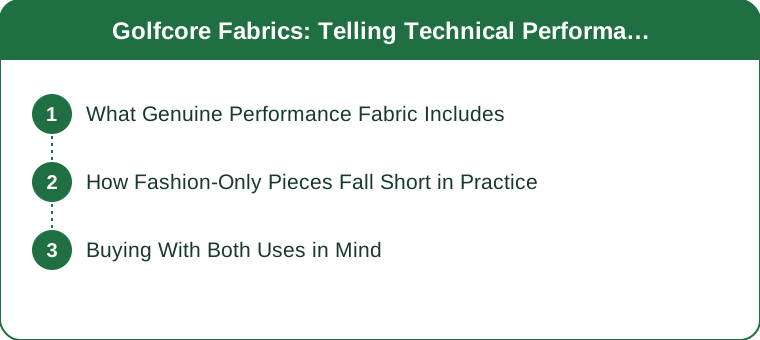
What Genuine Performance Fabric Includes
The functional markers: the the-moisture-wicking-blend-specificity (the true performance golf fabric typically specifying a polyester-spandex or similar wicking blend by percentage on the label, not just a vague ‘breathable’ marketing claim), the the-four-way-stretch-construction (the technical golf apparel commonly built with four-way stretch construction to accommodate the swing’s full rotational range, a specific textile property rather than general stretchiness), the the-uv-protection-rating-when-stated (a stated UPF rating being a reliable indicator of genuine technical intent, since fashion-only pieces rarely bother testing and labeling for it).

How Fashion-Only Pieces Fall Short in Practice
The gap that shows on the course: the the-cotton-or-cotton-blend-limitations (the cotton-heavy blends common in fashion-golfcore retaining moisture and restricting swing movement in ways technical fabric doesn’t, even when the silhouette looks identical), the the-two-way-stretch-restricts-swing (a garment with only two-way or minimal stretch visibly limiting shoulder and hip rotation mid-swing, a functional problem invisible until actually swinging), the the-no-wicking-means-visible-sweat-through (the non-technical fabric showing visible sweat-through faster, which matters practically during an actual round in heat).
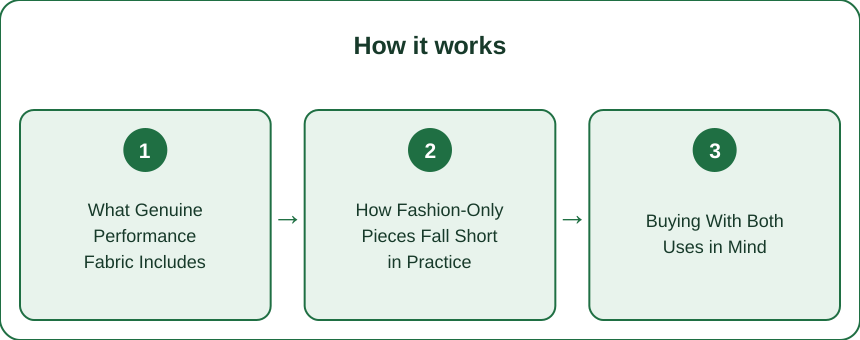
Buying With Both Uses in Mind
The practical split: the the-label-percentage-check-before-purchase (the checking the actual fabric composition percentage on the label rather than relying on the garment’s visual style alone), the the-dual-purpose-pieces-worth-the-premium (a genuinely technical piece typically costing more but working for both the course and everyday wear, while a fashion-only piece only works for the latter), and the frame (if it’s ever going on an actual course, check the fabric composition — the golfcore look alone doesn’t guarantee the function)).
Golfcore’s move into everyday fashion means the look is now available in fabrics that were never built to survive an actual round, and the gap between the two only shows up once someone is actually swinging in the heat. Genuine performance fabric specifies its wicking blend percentage rather than a vague breathability claim, is typically built with four-way stretch to accommodate the swing’s full rotational range, and often carries a stated UPF rating that fashion-only pieces rarely bother testing for. Cotton-heavy fashion blends retain moisture and restrict movement even when the silhouette looks identical, and two-way stretch construction can visibly limit shoulder and hip rotation mid-swing — a functional problem invisible until it’s actually tested on a course. The practical fix is simple: check the fabric composition percentage on the label before buying, especially for anything intended for actual play, since the golfcore aesthetic alone says nothing about whether the fabric underneath can keep up. Golfcore Fabrics: Telling Technical Performance Apart From Just Looking the Part.
See It in Motion
Seen here: UPF 50+ Pleated Running Skort with 26” Leggings & Pockets — shop similar styles on bubblelime.com
Keep Reading
This article is for general informational and styling purposes only. Fit, sizing, and product availability may vary.