7 Golfcore Pieces That Solve Cool Morning Rounds
Quick Answer: The transitional golf problem is a 10 to 14C swing between the first tee and the ninth green, which means one outfit has to work at two temperatures. Seven pieces cover it: a quarter-zip midlayer, a sleeveless vest, a longer skort, technical trousers, a fine merino base, a packable windbreaker, and proper mid-length socks. Everything else is variation on those.
The piece most people are missing is the vest - it solves the specific problem of a warm core and arms that need to move freely.
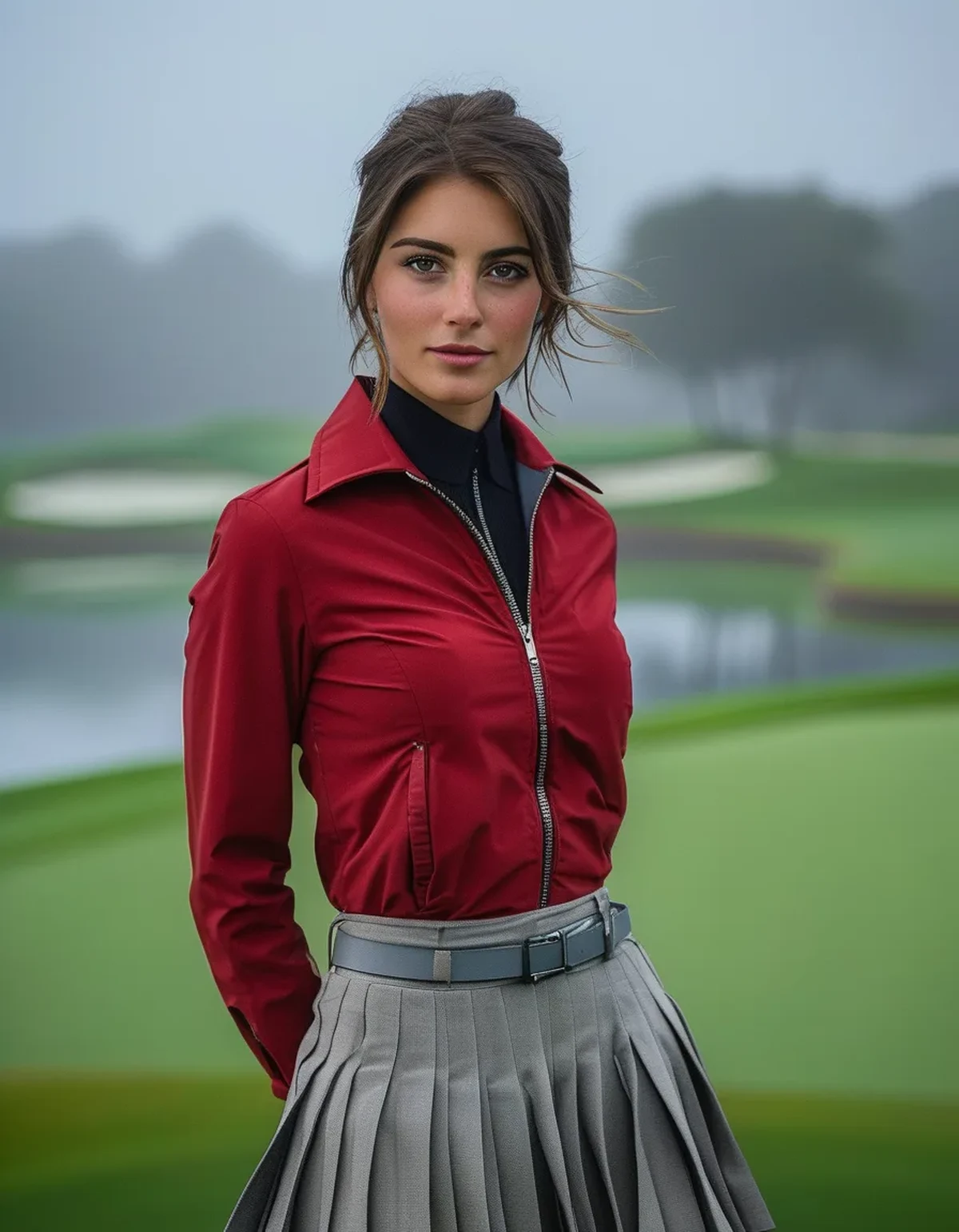
1. The quarter zip midlayer, which does most of the work
This is the single most useful transitional golf piece and worth spending on before anything else.
Why the quarter zip specifically. The zip is a temperature dial. Fully closed it traps warmth around the neck and chest; half open it dumps heat fast; fully open it becomes a loose layer over a polo. One garment covering roughly a 6C range is exactly what a morning round needs.
What to look for:
- A fabric with some stretch, because a rigid midlayer restricts the shoulder turn and you will notice by the third hole
- Set-in or raglan sleeves that allow full rotation. Try the swing motion in the fitting room - a surprising number fail this
- Flatlock seams, since a raised seam under the arm becomes an irritation over eighteen holes
- A weight of roughly 200 to 280gsm, which is the transitional sweet spot. Heavier is a winter piece
On fabric:
- Merino blends are excellent - warm for their weight, odour-resistant, and they handle the warm-cold-warm cycle well
- Technical polyester is cheaper and dries faster but holds odour
- Cotton blends look better and perform worse. Cotton holds sweat, and a damp cotton midlayer at 12C is genuinely unpleasant
The styling point. A quarter zip in a solid neutral is the most versatile golfcore item there is - it works over a polo on the course and with jeans afterwards. This is the piece to buy in navy, cream, or a muted green rather than something seasonal you will tire of.
2. The vest, and 3. the longer skort
2. The sleeveless vest, which solves the specific transitional problem.
Why it works when a jacket does not. The core needs insulation and the arms need freedom - and in a golf swing, the arms need a lot of it. A vest gives warmth exactly where it helps and nothing where it interferes. This is why you see them everywhere on tour in shoulder seasons.
What to look for:
- A quilted or lightly insulated front with a knit or softshell back, which is the standard construction and the right one - it insulates the front and breathes at the back
- Armholes cut generously, and check by making a full swing motion
- Length to the hip, not below - a long vest interferes with the trail arm on the backswing
- A collar you can zip up, since neck warmth on a cold morning is disproportionately effective
3. The longer skort.
Why the length changes for this season. Summer skorts sit high; transitional weather wants 43 to 48cm. The extra coverage matters meaningfully on a 10C morning, and the proportion reads better with a midlayer on top.
- A ponte or heavier technical fabric rather than the light summer weights - it holds shape in wind, which is the practical difference
- Genuine pockets, which is a specification worth checking rather than assuming
- Darker colours for autumn - navy, charcoal, deep green, camel - which also disguise the mud that becomes unavoidable
- Consider it with sheer or opaque tights on the coldest mornings, which extends the season by weeks
4. Technical trousers, and 5. the merino base layer
4. Technical trousers, which most golfcore wardrobes skip.
Why they earn their place. There comes a morning where bare legs stop being reasonable, and the alternative to trousers is not playing. A good pair extends the season by about six weeks at each end.
What separates good from bad:
- Four-way stretch, which is not optional. A trouser that restricts the hip turn changes your swing, and no golfcore aesthetic is worth that
- A water-repellent finish, since morning dew soaks trouser hems within three holes
- A tapered but not skinny leg, which is the current proportion and also the practical one
- A slightly higher rise, which stays put through the swing and pairs better with a tucked polo
5. The fine merino base layer.
Why merino beats the alternatives here. A 150 to 200gsm merino base adds real warmth with almost no bulk, regulates temperature as you heat up, and does not smell after a round in the way synthetics do.
- Long sleeve under a short sleeve polo is the classic and still the best transitional look
- A fitted cut, since a loose base layer bunches under a polo and is visible
- Neutral or matching colours unless you want it to be a feature - white, black, or a tone matching the polo
- This is where genuine quality matters. Cheap merino pills quickly and itches; good merino lasts years and does not

6. The packable windbreaker, and 7. the socks nobody thinks about
6. The packable windbreaker.
Why wind matters more than temperature. A 10C morning with a 20km/h wind feels like 5C, and wind is the defining feature of autumn golf. A layer that blocks wind outperforms a thicker layer that does not, which is the whole argument for a thin shell over a heavy knit.
Specifications that matter:
- It must pack into its own pocket or a bag pocket. A windbreaker you left in the car is not a windbreaker
- Golf-specific cut with articulated shoulders. A running windbreaker will restrict the swing - this is a real difference, not marketing
- Quiet fabric. Some shells are noisy enough to be distracting mid-swing, and it is worth checking
- Elasticated or adjustable cuffs, which stop the sleeve riding up on the follow-through
7. Proper mid-length socks.
Why this unglamorous item is on the list. Cold, wet feet end rounds, and autumn morning grass is genuinely soaking. A no-show cotton sock in September is a mistake you make exactly once.
- Merino or a technical blend, never cotton. Cotton holds water and stays cold
- Mid-crew or crew length, which is both the current look and the practical one - it covers the gap between shoe and trouser hem
- Some cushioning at the heel and forefoot, since walking eighteen holes on hard autumn ground is more impact than summer ground
- Two pairs in the bag. Changing socks at the turn on a wet morning is a genuine improvement to the back nine
What Nobody Tells You About Transitional Golf Dressing
The temperature swing over a round is bigger than the day’s forecast range suggests. An 8am tee time in late summer can start at 9C and finish at 21C. You are not dressing for a temperature - you are dressing for a 12C journey, which is why removable layers beat any single correct choice.
Fabric noise is a real consideration and nobody mentions it in reviews. Some technical shells are loud enough to distract you mid-swing, and worse, to distract the person you are playing with. Scrunch the sleeve in the shop. If it is loud in your hand, it is loud in your backswing.
The layer you remove has to go somewhere. A midlayer tied round the waist affects the hip turn, and one stuffed in a golf bag pocket comes out creased. Check that your bag has a pocket that takes a packed layer before you rely on the system.
Dark colours are practical, not just seasonal. Autumn golf involves mud, wet grass, and damp sand, and a cream skort at 8am on a dewy course does not stay cream. This is the season the darker palette actually earns itself.
Most transitional golf discomfort is at the extremities, not the core. Hands, ears, and feet drive the perception of being cold far more than the torso. A pair of mittens, a headband, and merino socks weigh nothing and outperform an extra midlayer - and they cost a fraction of one.
The quarter zip is the piece to spend on and the vest is the piece to buy second. Everything else on this list has decent budget options. Those two are where construction quality is visible in both performance and how it looks after a season.
FAQ: Transitional Golfcore, Answered
What is the single most useful transitional golf piece?
A quarter-zip midlayer in a stretch merino blend, roughly 200 to 280gsm. The zip works as a temperature dial across about a 6C range, and it wears well off the course.
Why a vest rather than a jacket?
Because the swing needs unrestricted arms and the core needs warmth. A vest gives insulation only where it helps. It is the piece most people are missing, which is why they end up too warm or too restricted.
How long should a transitional skort be?
Around 43 to 48cm, longer than summer lengths. The extra coverage matters at 10C, and the proportion sits better under a midlayer. Choose a heavier technical fabric that holds its shape in wind.
Do I need golf-specific outerwear?
For anything with sleeves, yes. Golf-cut shells have articulated shoulders that allow a full turn; a running or general-purpose windbreaker will restrict it noticeably. Vests are more forgiving.
What should I not wear for autumn golf?
Cotton anywhere it will get wet - socks especially, and base layers. Cotton holds moisture and stays cold, and a damp cotton layer at 12C is genuinely miserable for the back nine.
How much does wind change what I should wear?
A lot. A 20km/h wind at 10C feels closer to 5C. A thin windproof shell outperforms a much heavier knit that lets air through, which is why the packable windbreaker earns its place over a warmer-looking sweater.
TL;DR:
- Seven pieces cover transitional golf: quarter zip, vest, longer skort, technical trousers, merino base, packable windbreaker, proper socks
- The quarter zip is the temperature dial and the best single investment
- The vest solves the real problem - warm core, free arms - and is what most wardrobes are missing
- Wind resistance beats thickness; a thin shell outperforms a heavy knit at the same temperature
- Extremities drive cold perception, so mittens, a headband, and merino socks outperform another midlayer
You are not dressing for a temperature, you are dressing for a 12C journey between the first tee and the ninth green. Build the outfit so it works at both ends and the round looks after itself.
See It in Motion
Seen here: UPF 50+ Adjustable A-Line Running Skort with Pockets — shop it on bubblelime.com
Keep Reading
This article is for general informational and styling purposes only. Fit, sizing, and product availability may vary.