7 Golfcore Mistakes That Make the Look Read as a Costume
Quick Answer: Golfcore fails when it reads as a complete uniform rather than a set of borrowed pieces. The reliable rule is one or two golf-derived items maximum, styled with everyday pieces, and with the most literal sporting signifiers - visors, golf gloves, performance logos, spiked shoes - left out entirely. Fabric matters more than silhouette: technical performance fabric off-course is what most often tips the look from fashion into costume.
The pieces are right. The proportions are right. And somehow the whole thing looks like you are heading to a course rather than to lunch. It is nearly always one of seven things.
1. Wearing the full kit at once
This is the single most common failure and it accounts for most of the rest.
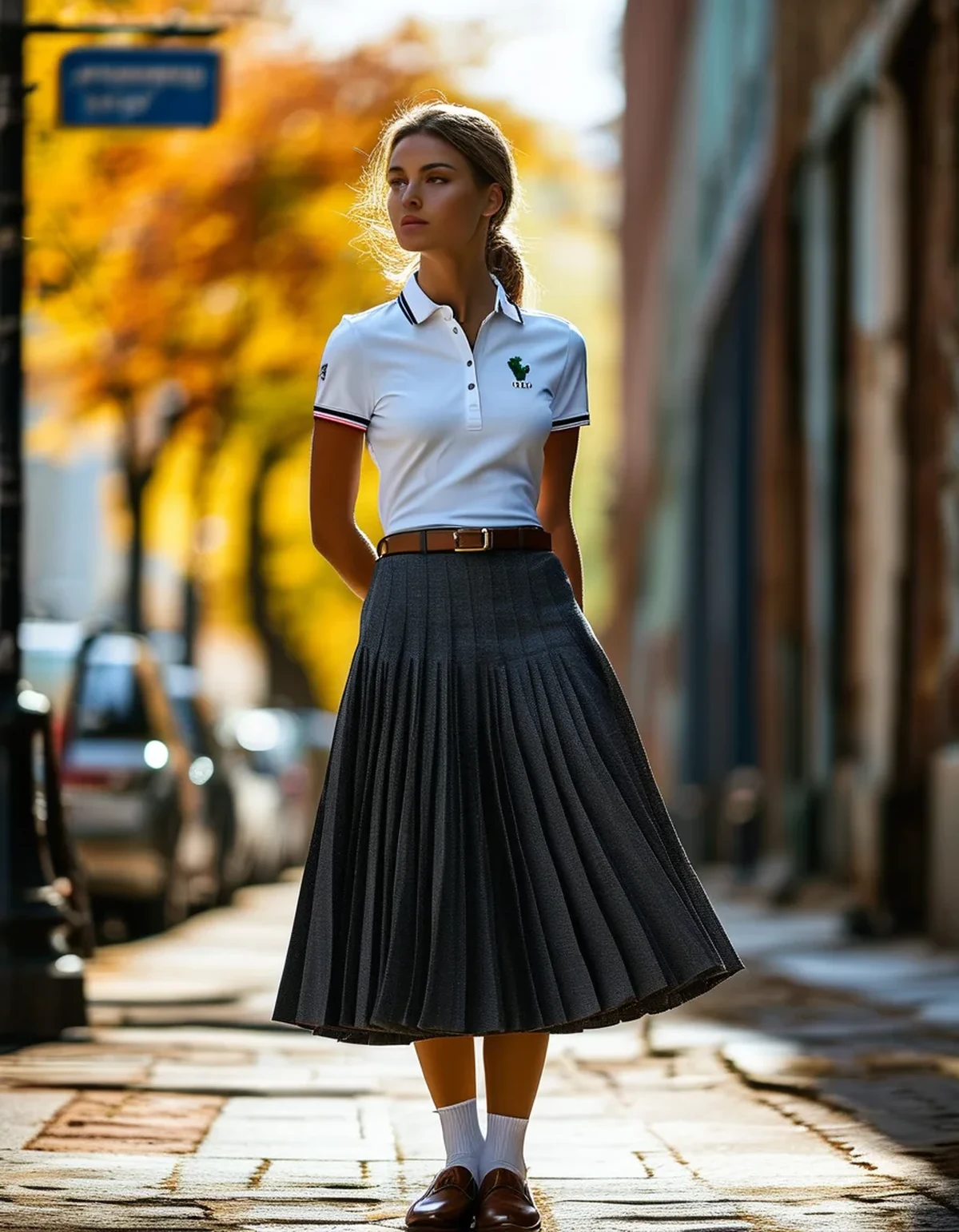
Golfcore works as a reference, not a reproduction. A polo, a pleated skirt, a knitted vest, argyle socks, and loafers together is not a look inspired by golf - it is golf clothing. The eye reads complete sets as uniforms, and uniforms read as costume the moment they leave their context.
The working ratio is one or two golf-derived pieces per outfit. A pleated skirt with a plain crew-neck knit and boots. A knitted vest over a white shirt with straight jeans. Each of these carries the reference clearly without announcing it.
The other pieces should be unambiguously ordinary. This contrast is what makes the golf piece read as a deliberate style choice rather than as necessary equipment.
And there is a useful test: remove one golf-signalling item from the outfit and check whether the look survives. If removing the vest leaves you with an ordinary good outfit, the vest was styling. If removing it leaves you with an incomplete costume, the whole thing was leaning on the theme.
2. Using actual performance fabric off-course
Fabric gives the game away faster than silhouette does.
Technical polyester reads as sportswear under any styling. A performance polo has a specific sheen, drape, and surface that the eye recognises instantly as functional kit, even from a distance and even in a plain colour.
The fashion version of the same shape is made in natural or natural-feeling fibres - cotton piqué, merino, a cotton-blend knit - which drape differently and reflect light differently.
This is why a cotton piqué polo works off-course and a moisture-wicking one does not, despite being the same garment shape. It is also why a merino knitted vest reads as heritage styling while a technical fleece vest reads as gear.
Same principle applies to pleated skirts. A skirt in a crisp cotton, wool blend, or heavier technical fabric with a matte finish works. A skirt in a lightweight shiny performance fabric with a built-in short reads as equipment.
One practical exception: genuinely well-made technical pieces in matte finishes and muted colours can work, but they are the harder route, and the failure mode is not obvious until you see a photo.
3. Keeping the visible sporting logos
Branding is a context signal, and it does not travel.
A prominent golf brand logo tells the viewer this is functional kit rather than a fashion choice, and no amount of styling overrides it.
Tour-style branding is the strongest version of this - sponsor logos, tournament markings, and anything reading like a team kit anchor the garment firmly to the course.
Small, discreet, or absent branding is what allows the piece to read as clothing. A plain polo with no visible logo is enormously more versatile than an identical one with a chest logo.
Heritage and preppy brand marks behave differently and often support the look, because they reference the club-and-campus lineage golfcore draws from rather than modern performance sport.
The practical rule: if the logo would look at home on a tour broadcast, it works against you off-course.
4. Bringing the accessories
This is where the look tips from stylish to fancy dress fastest.
Visors, golf gloves, and spiked or dimpled golf shoes are equipment, not accessories, and they have no non-golf reading whatsoever.
A cap is the borderline case and it depends entirely on the cap. A plain cotton baseball cap is neutral. A performance cap with a golf brand across the front is equipment.
Argyle is more loaded than people realise. Argyle socks with a pleated skirt and a polo is the single most literal golf reference available, and it pushes an otherwise good outfit over the edge. Argyle in a knit vest, worn with jeans and no other golf reference, works well.
The strongest accessory choice is deliberately ordinary - a normal leather bag, a normal watch, plain jewellery. Ordinary accessories are what confirm to the viewer that the golf-derived piece is a style decision.
And shoes carry a lot of weight here. Loafers, plain leather trainers, and ankle boots all support the look. Anything with visible sports engineering pulls it back toward the course.
5. Ignoring what the season is doing
Golfcore is strongly associated with warm-weather images, and autumn requires translation rather than repetition.
The summer version - polo, short skirt, bare legs, visor - does not transfer to October. Worn with a jacket over it, it reads as summer clothing being made to last, which looks like poor planning rather than seasonal styling.
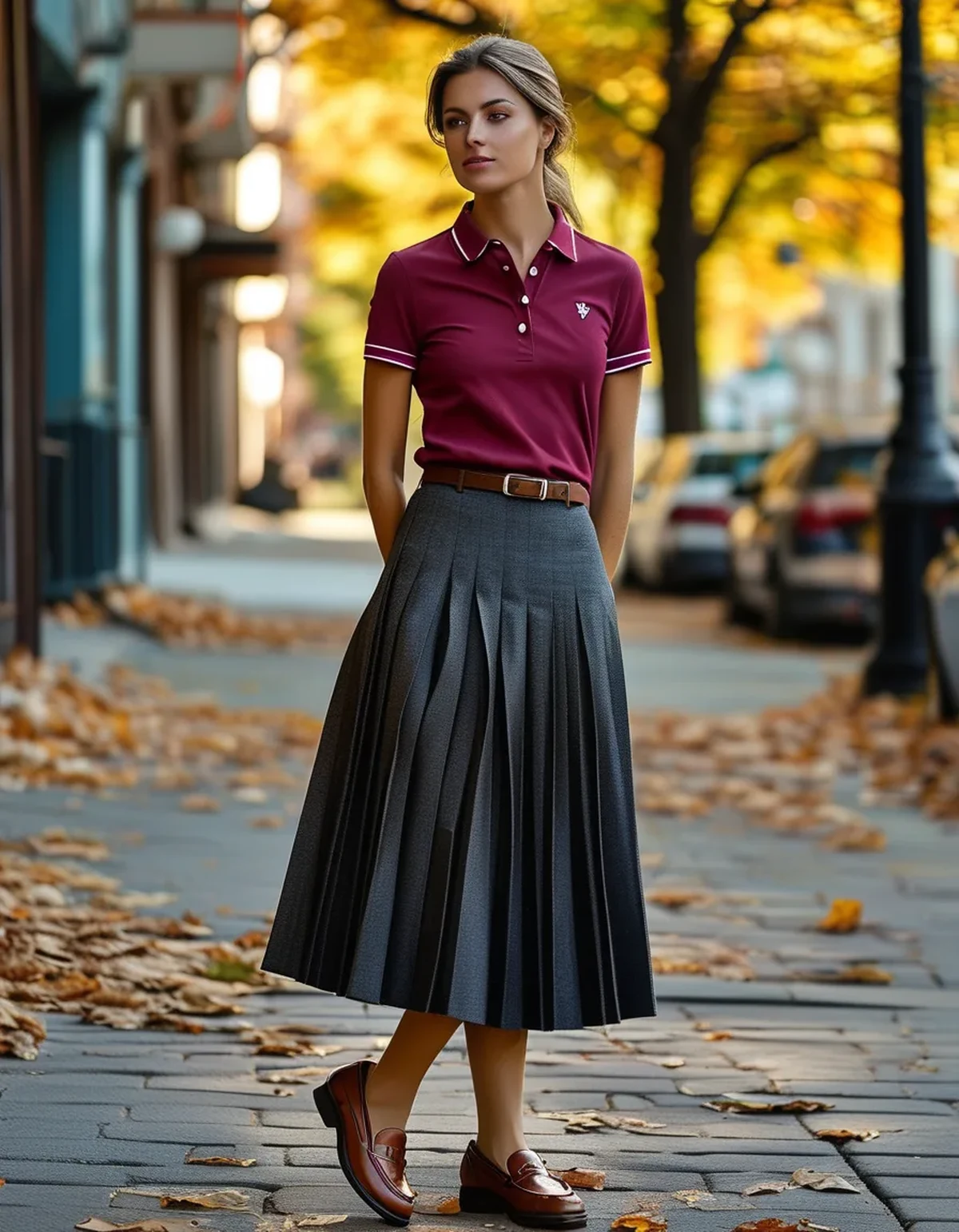
The autumn version leans on knitwear, which is fortunate because knitwear is where golfcore is strongest. A cable or argyle knit vest over a shirt, a heavier pleated skirt with opaque tights, and loafers or ankle boots is the season’s version and it is far more wearable than the summer one.
Tights change the reading of a pleated skirt significantly - it moves from sporting to academic, which is exactly the direction that helps.
Colour matters seasonally too. Bright whites and summer brights read as course clothing in autumn. Cream, camel, forest green, burgundy, and navy read as seasonal dressing.
And outerwear should be ordinary. A wool coat or a leather jacket over golfcore pieces grounds the whole outfit. A performance windbreaker over the same pieces returns it to the course immediately.
6. Getting the skirt length and fit wrong
The pleated skirt is golfcore’s central piece, and its proportions are what make or break the look.
Golf skirts are typically short by design, for movement, and often have integrated shorts. That length reads as sporting because it is sporting.
A midi or below-knee pleated skirt reads as fashion, and it is the version that works everywhere. The pleats carry the reference; the length removes the sporting function.
Fabric weight matters at longer lengths. A midi pleat in a light technical fabric flies about and looks cheap. In a heavier crepe, wool blend, or substantial cotton it hangs properly and swings rather than flutters.
Waist placement is worth attention. A high waist with a tucked knit is the flattering, contemporary version. A low or mid waist with an untucked polo is the literal sporting proportion.
And check it seated and walking. A pleated skirt that behaves standing still can be a problem on stairs or a windy street, which is a practical concern that no amount of styling solves.
7. Treating it as a whole wardrobe rather than a mood
The final one is strategic rather than visual.
Golfcore is a reference that works best sparingly. A pleated skirt, a knit vest, and a good polo integrated into an existing wardrobe give you many outfits. A wardrobe of golfcore pieces gives you one look repeated.
The pieces that earn permanent places are the least literal ones. A merino knit vest, a well-cut pleated midi skirt, a plain cotton polo, and good loafers all function as ordinary wardrobe items that happen to reference the theme.
The pieces that date fastest are the most specific ones - anything with strong sporting engineering, obvious performance fabric, or literal course styling.
Buy the versatile ones properly and skip the rest. This is true of most trend-driven aesthetics, and golfcore is unusually well-suited to it because its core pieces are genuinely classic garments.
And the honest summary of all seven mistakes: golfcore works when someone has to think for a second about where the reference came from. It stops working the moment the answer is immediate.
Quick FAQ
How many golf pieces should one outfit have? One or two. Three is where it tips.
What is the most wearable golfcore piece? The knit vest, by a distance - it works over shirts, tees, and dresses, and reads as heritage rather than sport.
Can I wear an actual golf polo off-course? If it is cotton piqué with no visible logo, yes. If it is performance fabric with branding, it will read as kit whatever you put with it.
TL;DR:
- One or two golf-derived pieces per outfit, styled with unambiguously ordinary clothes.
- Fabric is the tell: cotton piqué and merino read as fashion, technical performance fabric reads as kit.
- Leave the equipment behind - visors, golf gloves, spiked shoes, and course branding have no off-course reading.
- Autumn version is knitwear-led: knit vest, heavier midi pleat, tights, loafers, wool coat over the top.
- Buy the versatile pieces properly and skip the literal ones, which date fastest.
If someone has to think for a second about where the reference came from, it is working. If the answer is instant, it is a costume.
See It in Motion
Seen here: UPF 50+ Pleated Running Skort with 26” Leggings & Pockets — shop similar styles on bubblelime.com
Keep Reading
This article is for general informational and styling purposes only. Fit, sizing, and product availability may vary.