7 Golfcore Fabrics That Fail in Late Summer Heat
Quick Answer: Golfcore leans heavily on structured, preppy materials - pique cotton, ponte, faux leather trims, heavy technical knits - that were designed for spring and autumn temperature ranges. In genuine heat they trap moisture, show sweat conspicuously, cling, or simply cook you. The seven worst offenders are heavy pique, ponte, non-perforated faux leather, dark polyester jersey, unlined linen blends with high polyester content, thick ribbed knit, and structured cotton twill. Lightweight woven cotton, real linen, and open-knit performance fabrics do the same job at 30 degrees.
The outfit that photographed perfectly in May is unwearable in August.
Same pieces, same styling. Different physics.

1. Heavy pique cotton - the signature fabric that cooks you
Pique is the defining golfcore material and the one that fails first.
What it is: a textured knit with a raised waffle or honeycomb surface, traditionally cotton, used for polo shirts since the 1920s. The texture is the whole point aesthetically - it gives the crisp structured look that separates a golf polo from a t-shirt.
Why it fails in heat: the raised texture means substantially more fabric per square centimetre than a flat jersey. More fabric means more thermal mass and more water retention. Cotton holds up to 27 times its weight in water and releases it slowly, so a pique polo that gets sweaty stays sweaty.
The specific failure: it goes from crisp to limp and clinging within about 40 minutes of real heat, and the structure that made it look good is exactly what makes it heavy once damp.
What to wear instead: a lightweight pique in a cotton-modal or cotton-Tencel blend, which keeps enough texture to read correctly and dries far faster. Or a performance pique in a fine-gauge polyester with a genuinely open structure - the good ones look almost identical and behave completely differently.
How to check before buying: hold it up to light. A summer-appropriate pique lets visible light through the structure. A heavy one is opaque, and opaque means hot.
2. Ponte knit - structure at the cost of breathability
Ponte is what makes golfcore skirts and dresses hold their shape, and it is essentially a thermal blanket.
What it is: a double-knit fabric, usually a rayon-nylon-elastane blend, constructed with two interlocking layers. That double construction is why it does not wrinkle, holds a silhouette and reads polished.
Why it fails: two layers of knit with almost no air permeability. Ponte was developed for structured workwear in temperate conditions, and it does that job brilliantly. In heat it functions as insulation.
The specific failure: sweat has nowhere to go, so it stays against the skin. Ponte does not show sweat marks readily - which sounds like an advantage and means the moisture is being held rather than evaporating.
What to wear instead: a single-knit ponte alternative - sometimes sold as scuba-lite or tech crepe - which gives 70% of the structure at half the weight. Or a woven cotton twill skort with a proper lining and a vented back, which holds shape structurally rather than through fabric density.
A useful rule: if a piece keeps its shape when you hold it up by one corner, it is holding shape through fabric weight, and fabric weight is heat.
The exception worth noting: ponte in an air-conditioned clubhouse is genuinely excellent - it looks sharp and the environment removes the problem. This is a fabric to keep for the parts of the day spent indoors.
3. Non-perforated faux leather trims
The belt, the visor brim, the bag detail, the shoe panel - small pieces with an outsized effect.
Why it fails: polyurethane coated fabric has essentially zero breathability by design, since the point of the coating is to be a barrier. Anywhere it contacts skin becomes a sealed area.
The specific failure points:
- A faux leather belt across the waist, where sweat pools and the skin macerates
- A visor sweatband in coated material, which is a genuinely poor design and common
- Shoe panels, which turn a breathable shoe into a non-breathable one
- Bag straps across the shoulder, which is minor but noticeable on a hot walk
Beyond comfort, there is a durability issue. Sustained heat and sweat degrade PU coatings - the plasticiser migrates and the surface can become tacky or start to crack. A faux leather belt worn through a hot summer will look older than one worn through a mild one.
What to wear instead: perforated versions of the same items, which exist and look almost identical. Woven fabric belts - the classic golf webbing belt is genuinely correct for the aesthetic and infinitely more comfortable. Cotton or terry sweatbands on visors.
And on shoes specifically: look for perforated uppers or knit panels. The performance difference in heat is not subtle, and most golf-adjacent shoe brands offer both versions of the same silhouette.
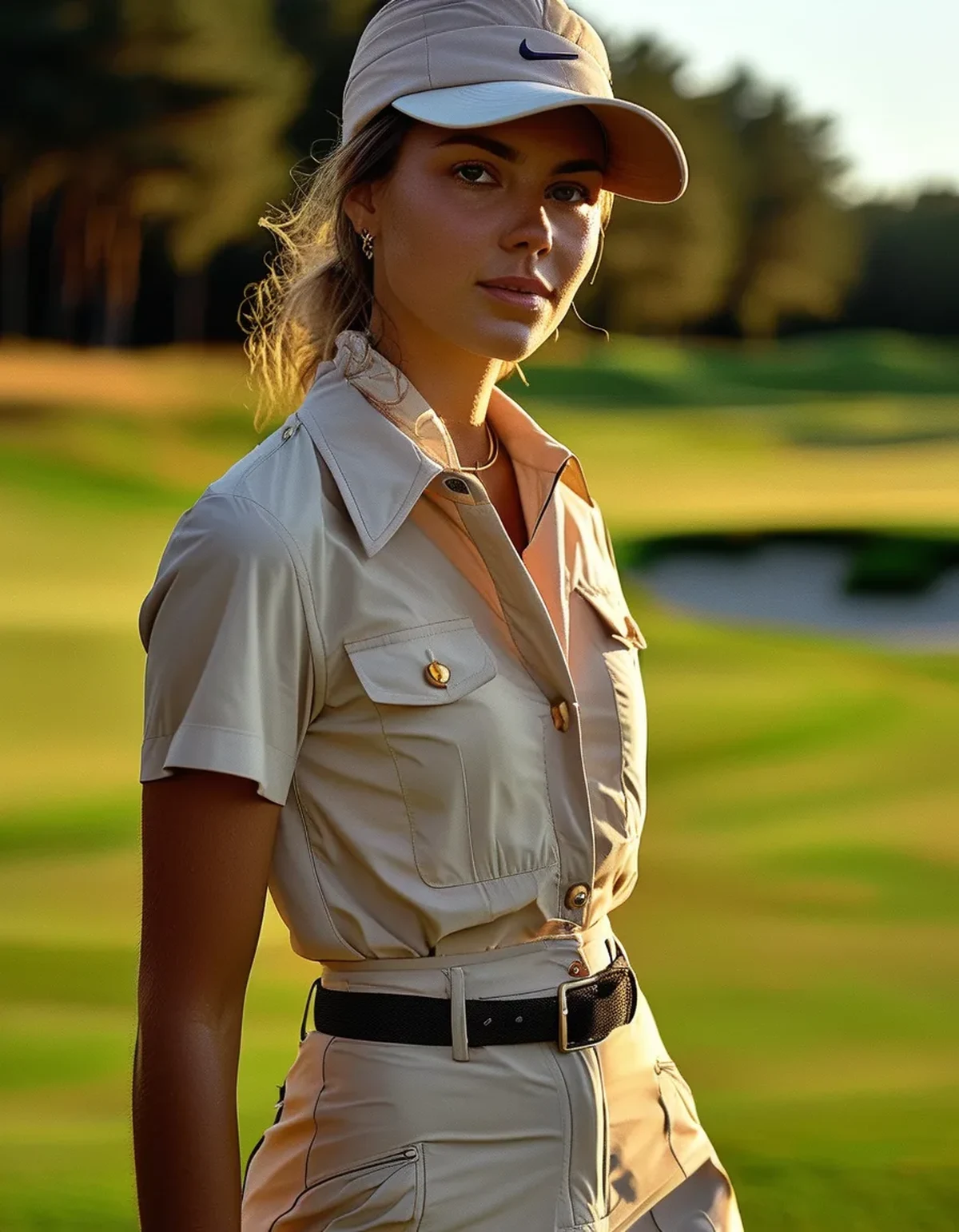
4. Dark polyester jersey - the sweat map
Not because polyester is bad, but because dark flat jersey shows every drop.
Why it fails: flat jersey polyester in navy, black or forest green displays sweat with unusual clarity. The fabric darkens where wet and the contrast against dry fabric is high. This is a purely cosmetic failure and it is the one people actually care about.
The pattern is predictable and unflattering: centre chest, upper back, underarm, and a line down the spine. On a golf course you spend a lot of time being seen from behind while walking.
What changes it:
- Pattern. Any print, stripe or heather breaks up the visual contrast and hides moisture almost entirely
- Texture. A textured surface diffuses the wet-dry boundary
- Colour. Mid-tones hide sweat better than either very dark or very light
- Heather and marl fabrics are the best performers here, since the yarn is already visually variable
What to wear instead: a heather grey or marled polo, a subtle stripe, or a mid-tone with visible texture. These are all entirely within the golfcore vocabulary - stripes and heathers are traditional rather than a compromise.
The counterintuitive detail: white is fine and often better than dark, because wet white fabric changes less visually than wet navy. The risk with white is transparency rather than sweat display, which a proper weight and correct underlayer handles.
5. Polyester-heavy linen blends and 6. Thick ribbed knit
Two failures with the same root cause: a material chosen for the look of a natural fibre without its behaviour.
Polyester-heavy linen blends. Linen is the best hot-weather fabric there is - highly breathable, wicks well, dries fast, and the texture is central to the preppy-summer look. A blend at 55% linen and 45% polyester keeps the texture and loses most of the performance.
The failure: you get the appearance of linen and the moisture behaviour of polyester, plus a fabric that wrinkles anyway. Worst of both.
Check the composition: 70% linen or above behaves like linen. Below about 50% it behaves like the synthetic. A linen-cotton blend is a genuinely good compromise; a linen-polyester one usually is not.
Thick ribbed knit. Ribbed vests, cardigans and knit polos are core golfcore pieces, and the ribbing works the same way pique does - more surface, more fabric, more heat.
The failure: a ribbed knit vest layered over a polo is two layers over the torso, which in heat is one layer too many regardless of how good it looks.
What to do instead: carry the knit rather than wear it. A fine-gauge ribbed vest in cotton or a cotton-silk blend works when the temperature drops in the evening, which is the actual use case. In midday heat it is a styling prop, and it belongs over the shoulders or in the bag.
A fine-gauge merino is the technical answer if you want the layer available - it handles heat far better than cotton rib and does the same visual job.
7. Structured cotton twill, and what to build the outfit from instead
Twill is the fabric of the golf skort, the chino and the structured short, and heavy twill is a summer problem.
Why it fails: twill is a tight dense weave with limited air permeability, and the structure that makes it hold a crease is the same structure that stops air moving through it. A heavy cotton twill skort in 30 degree heat holds heat against the hip and thigh.
The specific failure: the waistband, where a structured twill band plus a faux leather belt plus a tucked polo is three layers at exactly the point sweat accumulates.
What to wear instead: a lightweight twill in the 150 to 200 gsm range rather than 280 plus, or a cotton-Tencel twill blend which drapes better and breathes considerably more. Look for a vented or partially elasticated back on the waistband.
The full hot-weather golfcore kit, assembled:
- Top: heathered or striped performance pique, or a genuine lightweight cotton pique
- Bottom: lightweight cotton or cotton-Tencel twill skort with a vented waistband
- Belt: woven webbing or a perforated leather-look version
- Layer: fine-gauge merino or cotton-silk, carried rather than worn
- Shoes: perforated or knit-panel uppers
- Head: visor with a terry or cotton sweatband
None of this changes the look. Every substitution above is within the established golfcore vocabulary - stripes, heathers, webbing belts and linen are all traditional. The heat-appropriate version is not a compromise on the aesthetic, it is a better-executed version of it.
FAQ: Golfcore in Heat Questions, Answered
Is cotton actually bad for hot weather?
Lightweight woven cotton is excellent - breathable, comfortable and traditional. Heavy knit cotton like thick pique is the problem, because the texture adds mass and cotton releases moisture slowly. The weight and construction matter more than the fibre.
How do I tell if a polo is too heavy before buying?
Hold it up to light. A summer-appropriate pique lets visible light through the knit structure. If it is opaque and feels substantial in the hand, it will be hot. Weight in grams per square metre, when published, is the more precise version of the same test.
What colour hides sweat best?
Heather and marled fabrics, followed by patterns and stripes, because visual variation in the yarn breaks up the wet-dry contrast. Solid dark navy and black show it worst. White performs better than most people expect, with transparency being the thing to watch instead.
Can I still wear a knit vest in summer?
Yes, but carry it rather than wear it through the hot part of the day. A fine-gauge merino or cotton-silk vest works when the evening cools. A thick ribbed cotton one over a polo is two layers on the torso, which is one too many at 30 degrees.
Are linen blends worth it?
At 70% linen or above, yes. Below about 50% you get the appearance and wrinkle behaviour of linen with the moisture behaviour of the synthetic. Linen-cotton blends are a good compromise; linen-polyester ones usually are not.
Does perforated faux leather actually breathe?
Meaningfully better than solid coated versions, yes - the holes are functional rather than decorative. It is still less breathable than woven fabric, so for a belt worn against the skin all day, a woven webbing belt remains the more comfortable choice and is entirely correct for the look.
TL;DR:
- Heavy pique, ponte, solid faux leather, dark flat jersey, polyester-heavy linen blends, thick rib and heavy twill all fail at 30 degrees
- Texture and double-knit construction add fabric mass, which is what holds heat
- Hold a polo up to light - if it is opaque, it will be hot
- Heather and striped fabrics hide sweat far better than solid navy or black
- Linen blends need 70% linen or more to behave like linen
- Perforated shoes, woven webbing belts and terry sweatbands fix the coated-material problems
- Carry the knit vest instead of wearing it - the evening is its actual use case
Every swap here is already part of the golfcore vocabulary. Nothing about the look has to change.
See It in Motion
Seen here: UPF 50+ Adjustable A-Line Running Skort with Pockets — shop it on bubblelime.com
Keep Reading
This article is for general informational and styling purposes only. Fit, sizing, and product availability may vary.